
 中文简体
中文简体


Product Consultation
Your email address will not be published. Required fields are marked *
Content
When people see work gloves priced at tens or even hundreds of dollars, their first reaction is often, "It's just a piece of leather or fabric, why is it so expensive?"
In reality, the high price of work glove is often due to the considerable effort put into aspects you can't see. Simply put, the cost is mainly due to these factors:
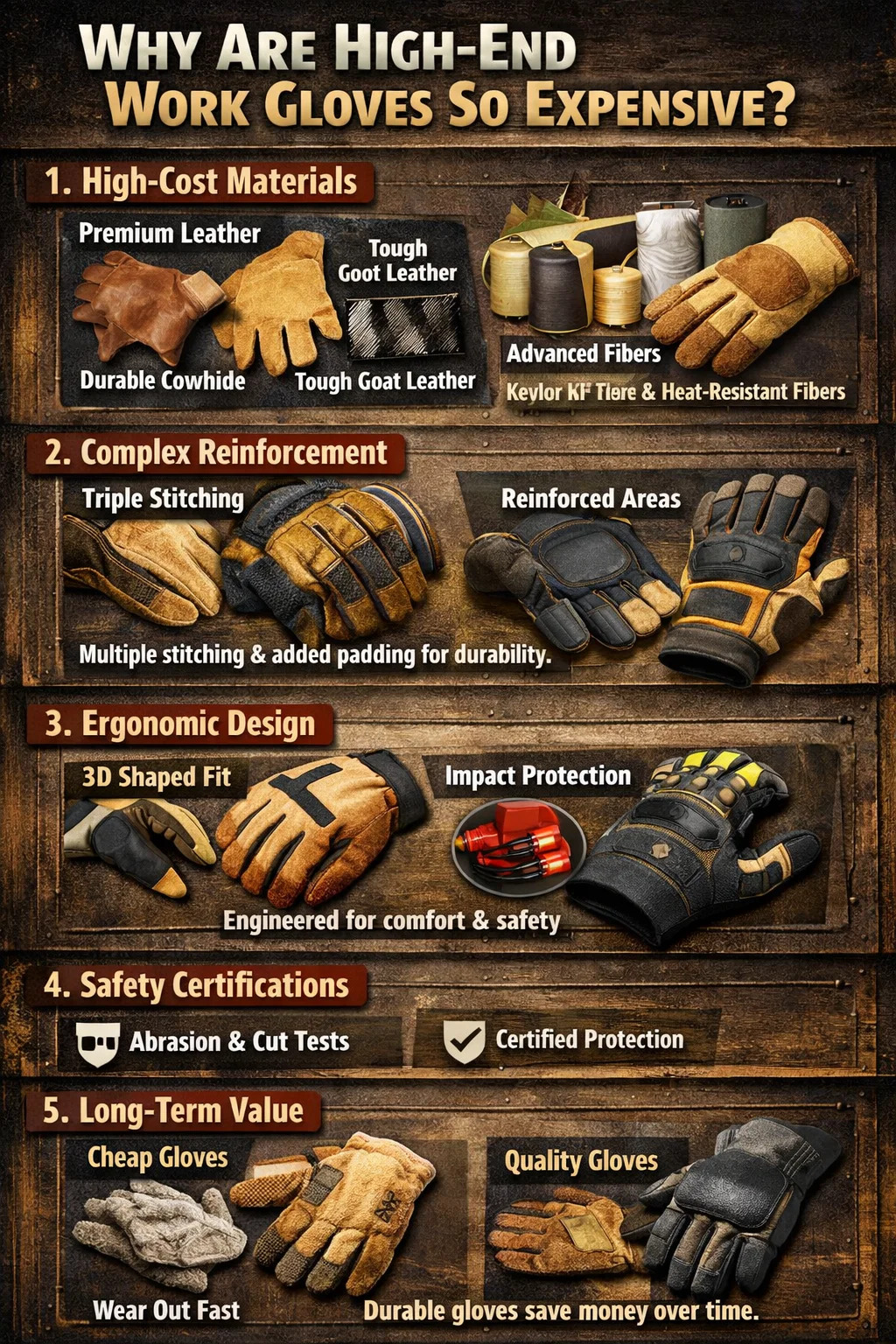
Ordinary cotton gloves are cheap because the materials are readily available. But to achieve durability, the material costs increase significantly.
High-grade leather: Even with cowhide, the parts used for durable gloves are usually thicker and more resilient. Goat leather, while expensive, is thin yet tear-resistant, allowing for greater dexterity during work, and this natural durability is inherently valuable.
Special fibers: Many high-end work gloves incorporate cut-resistant materials like Kevlar, or special heat-resistant fibers. The research, development, and procurement costs of these materials are many times higher than those of ordinary fabrics.
A cheap pair of gloves might simply be two pieces of fabric sewn together. But professional work gloves, designed for long-term use, require meticulous attention to detail.
Multiple stitching: Good gloves use double or even triple stitching, and employ high-strength nylon thread that is less likely to break.
Reinforcement in key areas: You'll find that expensive gloves have extra padding or a second layer of leather in the thumb crotch, fingertips, and palm. This "patchwork" design significantly increases labor and material costs, but ensures the gloves won't fall apart during heavy-duty work.
Anyone who works with their hands knows that gloves that chafe or are stiff like bricks are a nightmare.
Three-dimensional cutting: Expensive gloves are designed according to the natural curvature of the human hand. When worn, the fingers can bend easily, without requiring your muscles to "fight" against the glove. This flexibility requires precise pattern design and more complex cutting processes.
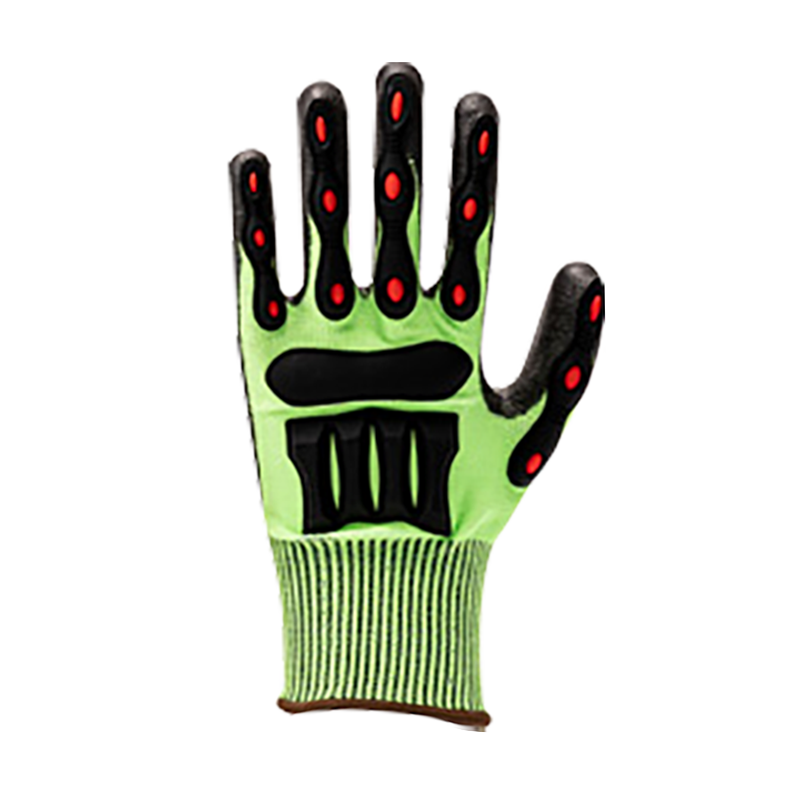
Shock absorption and protection: Many work gloves designed for handling or construction have rubber impact strips on the back of the hand and shock-absorbing pads in the palm. These protective measures can shield you from impact at critical moments, and this "insurance" function is included in the price.
Work gloves from reputable brands undergo rigorous testing before leaving the factory.
They are subjected to specialized abrasion, puncture, and cut resistance tests to ensure they meet the stated protection levels. Manufacturers have to pay expensive testing fees to obtain these quality certifications. This explains why the cheap, unbranded gloves you find in supermarkets, although they look similar, fall apart after just one use – because they haven't undergone these tests.
Although the unit price is higher, in the long run, high-end gloves actually save you money.
A pair of cheap gloves costing a few dollars might get a hole after just one day's work, forcing you to constantly buy replacements. However, a pair of high-quality work gloves that lasts for six months might end up costing less per day than the cheaper ones. This long-term value derived from durability is another reason for the premium price.
Your email address will not be published. Required fields are marked *
You can contact to me using this form.